
Vinkey
Customers

Compliance

October 21, 2025

Seveso III: what high-risk sites need to know

Seveso III becomes real in daily control, not in policy documents alone. High-risk sites need continuity between major-hazard scenarios, barriers, inspections, actions, and evidence.

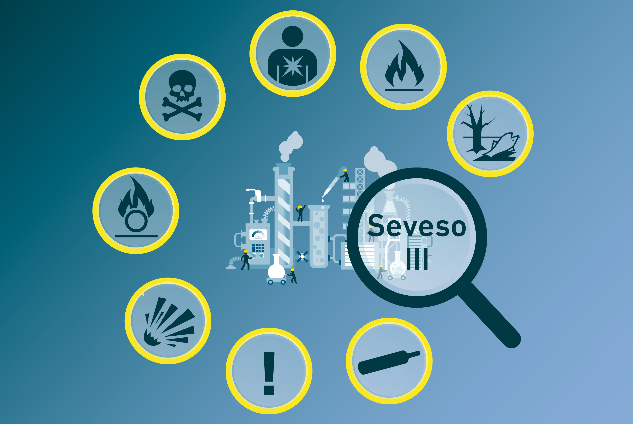
Seveso III article cover

Seveso III applies to sites where dangerous substances can create major-accident hazards. For operators, the practical challenge is not only writing a major accident prevention policy or maintaining a safety report. The challenge is proving that major-hazard controls are known, owned, checked, and improved while the site is running.

At high-risk sites, compliance pressure usually does not come from one missing document. It comes from weak continuity between what the site says it controls and what teams can prove in practice. Barrier checks may happen in one system, follow-up in another, and audit evidence in a folder structure that depends on local discipline. Over time, that fragmentation creates blind spots.

Major-hazard control needs a living trace

Seveso III raises the bar because operators need to demonstrate more than intent. They need to show that controls are defined, owned, reviewed, and acted on when performance starts to drift.

That means incidents, observations, permits, deviations, inspections, audit findings, and actions should not be treated as isolated processes. They are different signals inside the same control environment. A repeated inspection weakness, a temporary deviation, a permit conflict, or a late corrective action can all say something about whether a major-hazard barrier is healthy.

Evidence must follow the site

Evidence is stronger when it follows the physical and organizational context. A finding should be traceable to an asset, area, responsible role, requirement, control, and proof of follow-up where relevant. Auditors and regulators do not only need to see that something was reported. They need to understand how the site responded.

That is especially important when risk controls depend on several domains: permits for hazardous work, competence for critical roles, documents for operating methods, hazards for baseline threats, change for modifications, and inspections for routine checks.

The Vinkey view

Vinkey supports Seveso readiness by keeping compliance evidence connected to operational context. Requirements, audits, findings, inspections, actions, documents, assets, permits, hazards, and changes can point to the same operating picture, which is close to the wider logic of how industrial operations stay under control.

The practical win is not just easier reporting. It is better operational discipline. Teams spend less time reconstructing what happened and more time acting on risk early. That is often the difference between a site that is technically compliant and a site that is genuinely under control.

Compliance

October 21, 2025

Seveso III: what high-risk sites need to know

Seveso III becomes real in daily control, not in policy documents alone. High-risk sites need continuity between major-hazard scenarios, barriers, inspections, actions, and evidence.

Seveso III article cover

Seveso III applies to sites where dangerous substances can create major-accident hazards. For operators, the practical challenge is not only writing a major accident prevention policy or maintaining a safety report. The challenge is proving that major-hazard controls are known, owned, checked, and improved while the site is running.

At high-risk sites, compliance pressure usually does not come from one missing document. It comes from weak continuity between what the site says it controls and what teams can prove in practice. Barrier checks may happen in one system, follow-up in another, and audit evidence in a folder structure that depends on local discipline. Over time, that fragmentation creates blind spots.

Major-hazard control needs a living trace

Seveso III raises the bar because operators need to demonstrate more than intent. They need to show that controls are defined, owned, reviewed, and acted on when performance starts to drift.

That means incidents, observations, permits, deviations, inspections, audit findings, and actions should not be treated as isolated processes. They are different signals inside the same control environment. A repeated inspection weakness, a temporary deviation, a permit conflict, or a late corrective action can all say something about whether a major-hazard barrier is healthy.

Evidence must follow the site

Evidence is stronger when it follows the physical and organizational context. A finding should be traceable to an asset, area, responsible role, requirement, control, and proof of follow-up where relevant. Auditors and regulators do not only need to see that something was reported. They need to understand how the site responded.

That is especially important when risk controls depend on several domains: permits for hazardous work, competence for critical roles, documents for operating methods, hazards for baseline threats, change for modifications, and inspections for routine checks.

The Vinkey view

Vinkey supports Seveso readiness by keeping compliance evidence connected to operational context. Requirements, audits, findings, inspections, actions, documents, assets, permits, hazards, and changes can point to the same operating picture, which is close to the wider logic of how industrial operations stay under control.

The practical win is not just easier reporting. It is better operational discipline. Teams spend less time reconstructing what happened and more time acting on risk early. That is often the difference between a site that is technically compliant and a site that is genuinely under control.